Works
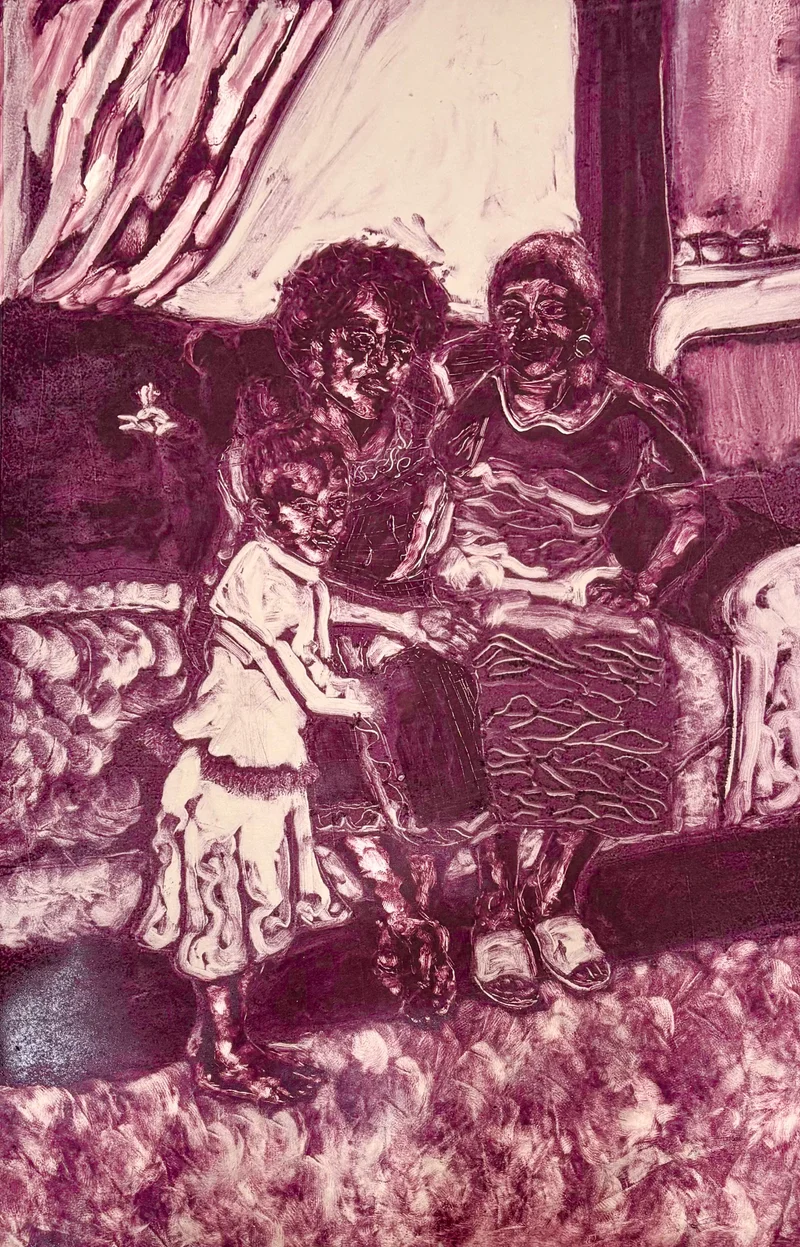
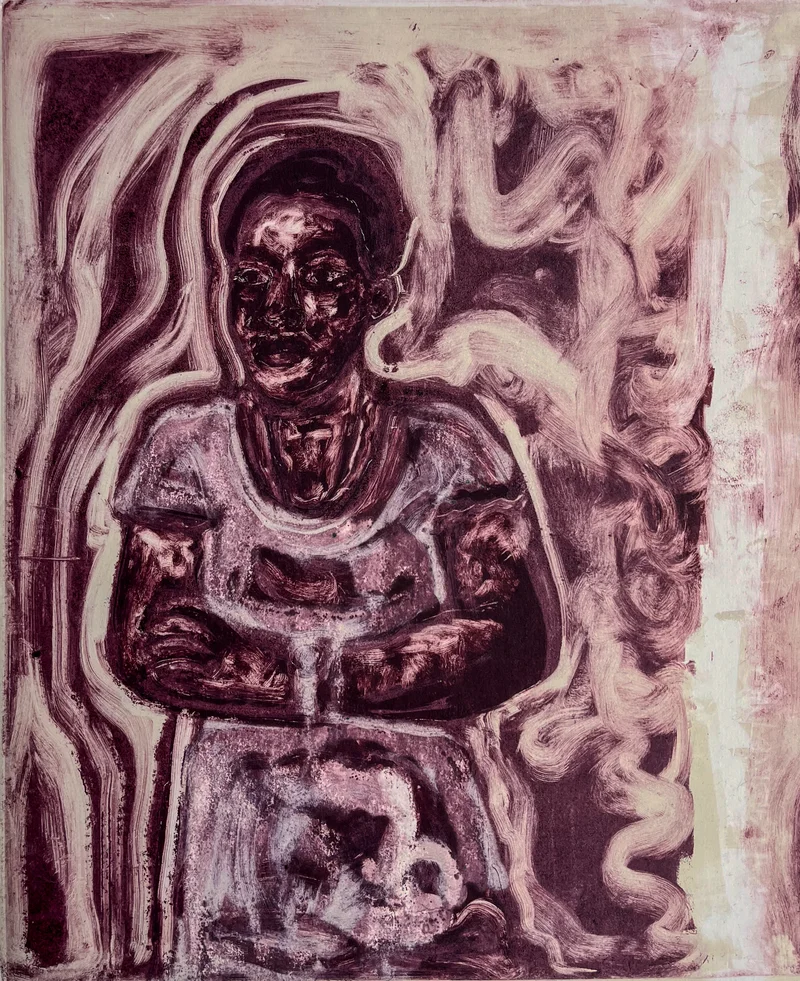
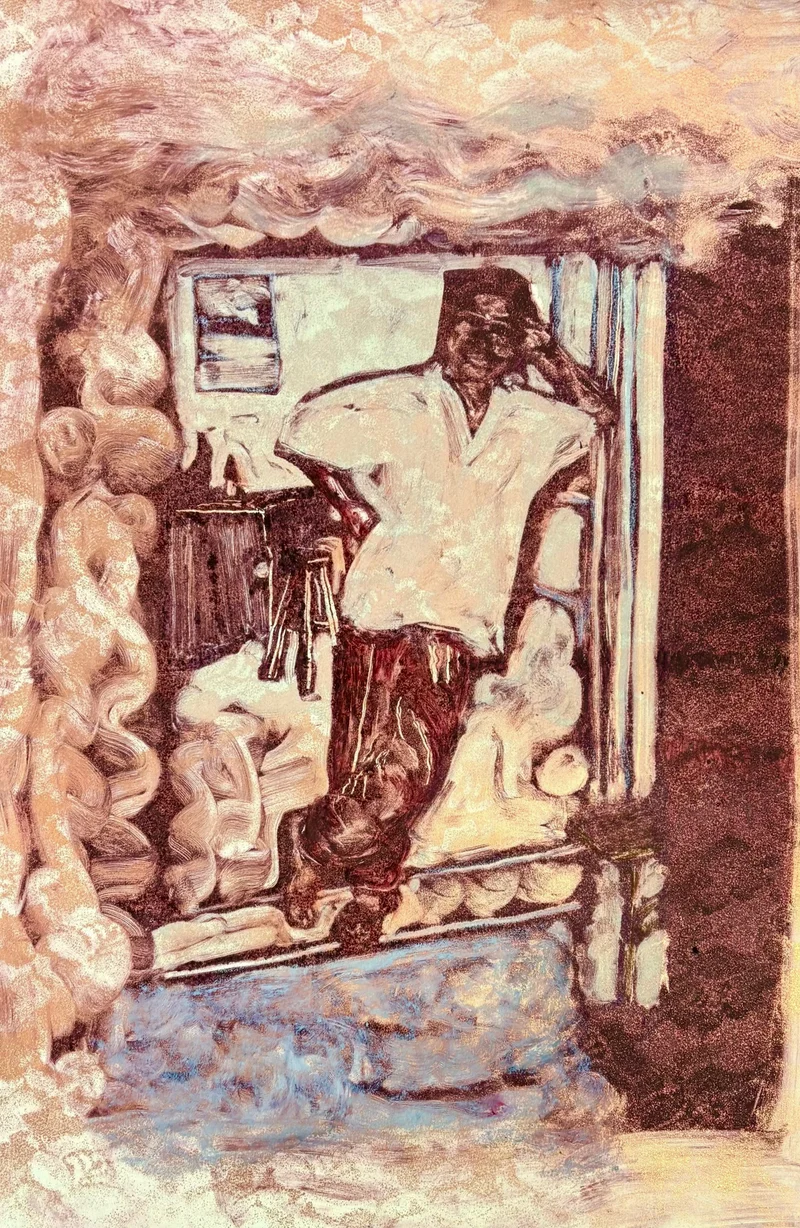
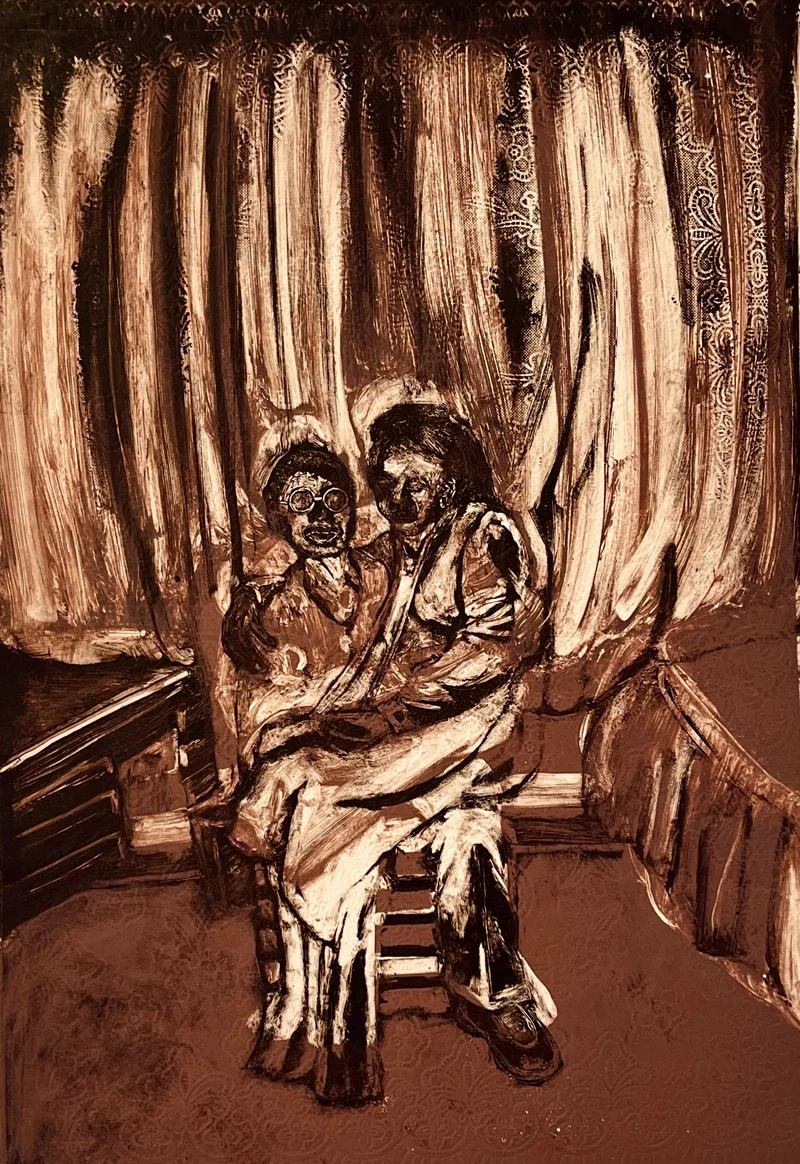
Falida Nkomo (b. 2002, Pretoria, South Africa) is a visual artist currently living and working between Pretoria and Johannesburg. She completed her BA Fine Arts degree with distinction at the Wits School of Arts, University of the Witwatersrand, and is currently pursuing a Master’s degree in Fine Arts by Research at the same institution. Working primarily through printmaking, installation, and drawing, Nkomo engages family photographic archives as a site for exploring memory, migration, inheritance, and belonging. Her practice investigates how visual art can function as a form of translation, mediating personal and collective histories while tracing the complexities of home, displacement, and intergenerational memory. Through processes of archival engagement, repetition, and material experimentation, she reimagines family narratives and examines the ways images carry both presence and absence across time. Nkomo’s work has been exhibited in South Africa and internationally, including at the RMB Latitudes Art Fair, FNB Art Fair, Investec Cape Town Art Fair, Wits Arts Museum for her undergraduate exhibition, Gallery Fresco (Lagos), and Melrose Art Gallery. In 2025, she presented her first solo exhibition, On Repatriation, at Gallery Fresco in Lagos, Nigeria. Her work forms part of the collection of the Peace Symposia: The Intersection of Culture, Art and Nature, organised by The Japan Institute and Portland Japanese Garden. She is the recipient of the 2024 Standard Bank Fine Arts Prize, and the 2024 Umsizi No Pende Visual Art Project Silver Prize and Public Votes Award.
“The personal archive revisits past and present conversations and is a ritual gesture to homecoming , an intimate knowing of what is familiar. Nkomo’s familial history, particularly her mother’s longing for home, becomes a haunting trace of the past. Similarly the absence and presence of family members is used as a compositional device that reconstructs a memorial gesture on cultural inheritance .She explores migration as both a physical journey and an emotional experience, highlighting hybridity as an “in-between space” shaped by differences among cultures. Her work reflects on the complexities of dislocation, rootedness and travel, serving as a form of repatriation that facilitates a reconnection with the past while envisioning future identities. Through using photographic memory and layering techniques, Nkomo effectively captures the essence of familial migration, articulating how identity is influenced by specific geographical landscapes. Her monotype printmaking serves to preserve a moment in time while, mediating through the image and also recognizing the presence of family members who have separated and passed on. This process becomes an imaginative encounter with tending to family roots and noticing that. As Toni Morrison writes, memories and recollections won’t give me total access to the unwritten interior life of these people; only the act of imagination can help me (Morrison, 1987:91-92). The monotype process becomes a gestural, intimate knowing of one’s own interior life through the act of events. As each gesture becomes a reconstruction of the unknown and known,where each impression captures the fragments of what Nkomo know’s intimately about the family member. This kind of memory work becomes an act of translation, as it translates printed matter to reveal the unknown traces of migration, becoming ways of knowing and being. Nkomo’s artistic practice fosters a profound sense of belonging that encourages viewers to engage critically with their own identities within the broader framework of migration and cultural heritage.”