Works
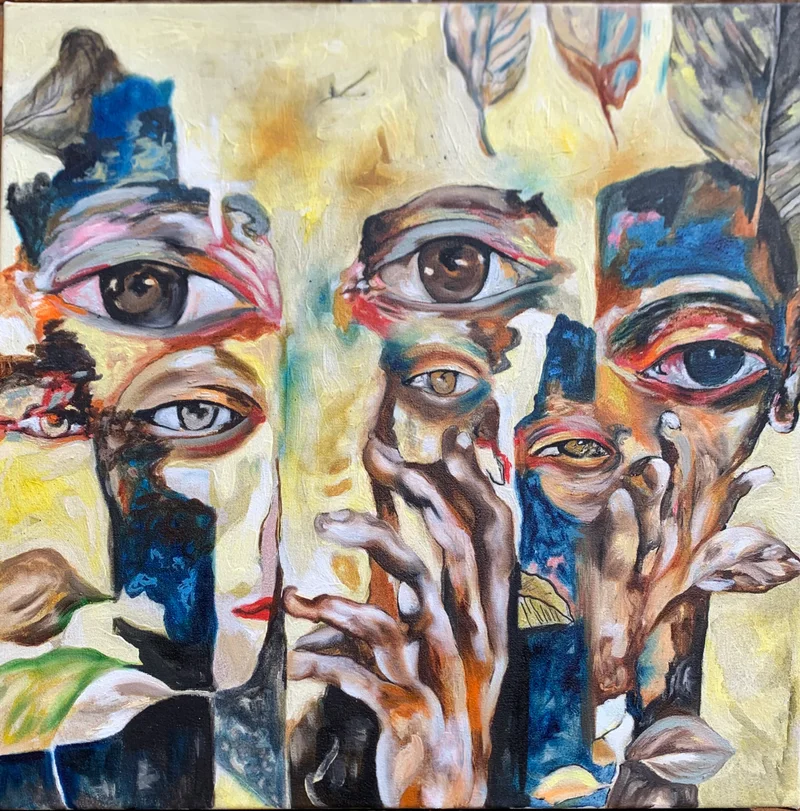
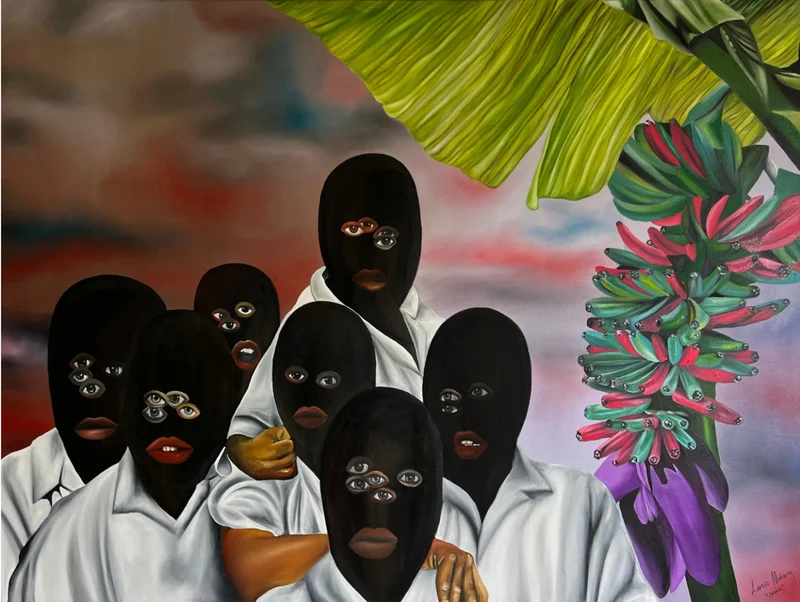
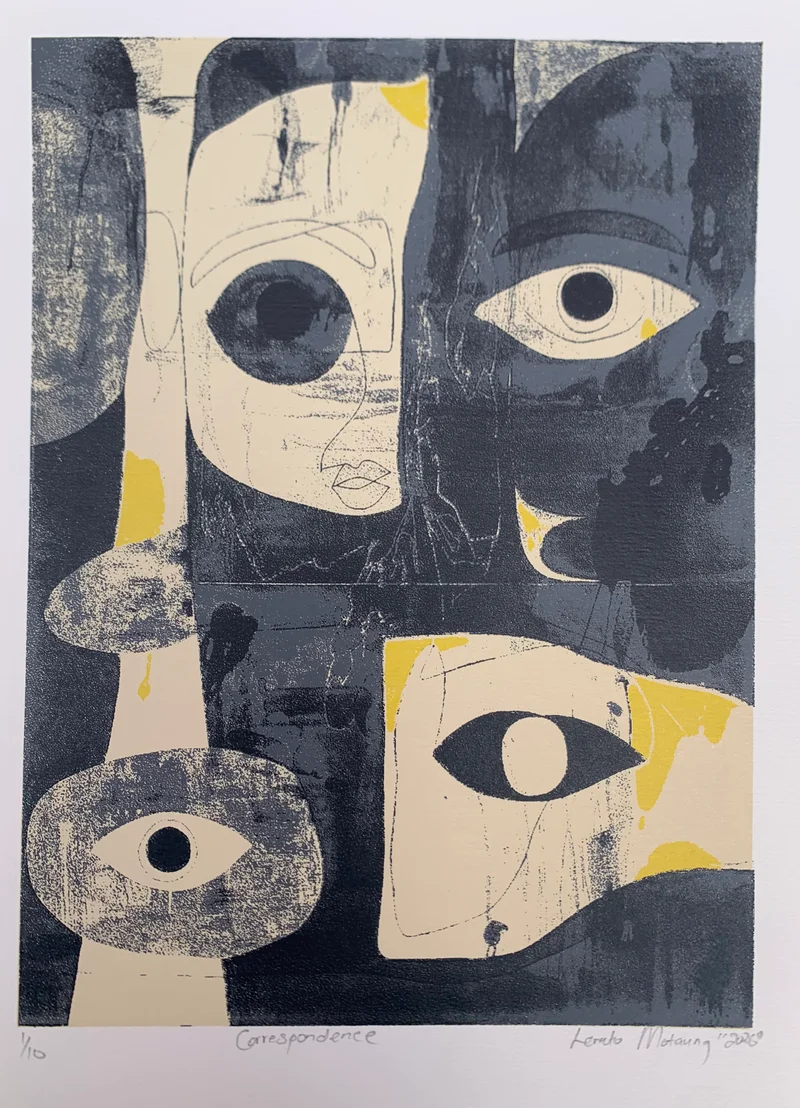
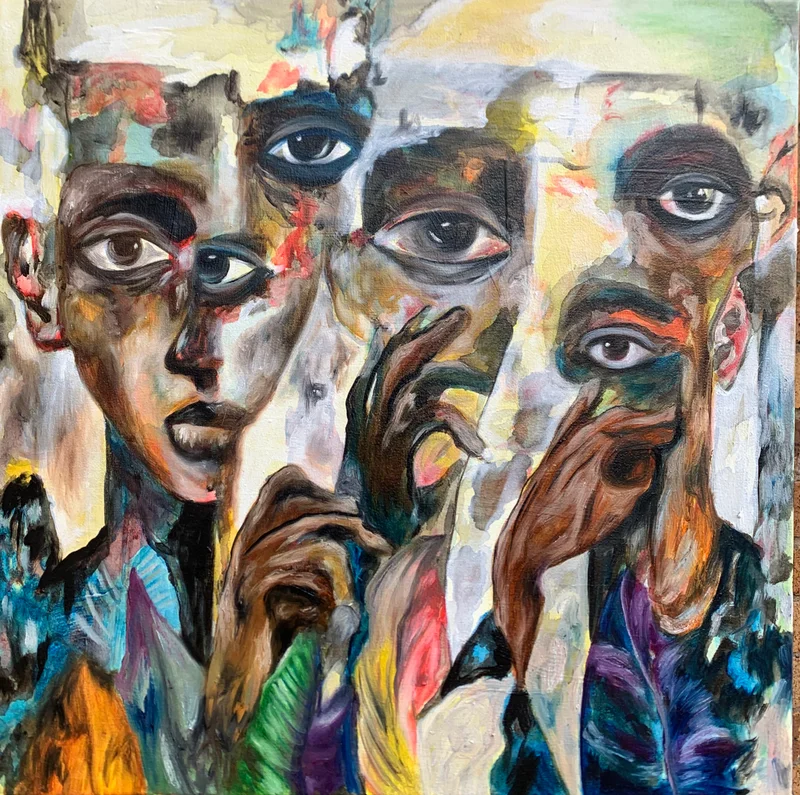
Lerato Motaung (b. Katlehong, South Africa) is a visual artist based in Johannesburg whose practice spans painting, installation, and performative sculpture. His work is grounded in questions of memory, displacement, and movement. Motaung treats each object not as symbol but as a carrier of factical histories, its prior conditions remaining conceptually active within the work. In 2020, Motaung won The Emergence Art Prize, organised by THK Gallery with support from Rand Merchant Bank. He was a finalist for the Sasol New Signatures Award at the Pretoria Art Museum (2021), and a finalist for the PPC Imaginarium Awards hosted by the University of Johannesburg Art Gallery (2019). His residencies include SAFFCA and More Family in Kruger National Park (2025), Quartier am Hafen Studio House on the banks of the Rhine in Cologne, Germany (2022), the AU20 Artists Residency in Senegal (2022), and In Bed with Artists, hosted by Nico Athene and sponsored by ALMA MARTHA, Cape Town (2017). His work is held in the Schulting Collection, Foundation H (Paris and Madagascar), and the Africa First Collection. His group exhibition history includes early presentations at the Pretoria Art Museum, Freedom Park Heritage Site and Museum, Tshwane University of Technology, and Johannesburg Fringe Art Fair, establishing a practice rooted in the South African institutional context from which its international trajectory has grown.
“Lerato Motaung Artist Statement My practice operates at the intersection of the corporeal and the intangible, across painting and installation. I do not set out to represent memory as image. What I am interested in is something more difficult and less legible, the condition in which memory functions, partially, non-linearly, and intractably. My work is set in an unknown time. It is affected by the past and the present simultaneously, occupying the gap between them rather than resolving it. This temporal ambiguity is not a formal experiment. It is a response to the experience of living between histories of carrying what cannot be put down, of inhabiting spaces that bear the accumulated weight of others who have passed through them. The materials arrive already carrying histories. Their prior conditions are conceptually active, not decorative. In this body of work, painting and installation are not separate modes but continuous enquiries, two means of attempting to plot what I call the unmappable parts of the human mind. I am drawn to the moment at which the physical world assumes shape in what exceeds it: the memory that returns in an object, the displacement that persists in the body, the history that lives in the form of something carried. These are not propositions I resolve. The rigour of the work lies precisely in its irresolution. What I seek is not resolution but form, a way of holding open questions with discipline, of making the weight of unfinished histories visible without pretending they can be set down.”